How to Save Money: 11 Things I Do as a Mom
The First Step Toward Saving Money is Noticing Where It’s Disappearing
Before we even think about ways to make more money, we have to pause and look at where the money we already have is going. And if you’re anything like me, it’s not always going where you thought it was.
It’s the little things that sneak up on you, those drive-thru dinners on nights when you’re too tired to cook, or subscriptions you completely forgot about. It doesn’t feel like much at the time but it adds up faster than we realize.

This isn’t about saying no to everything fun. It’s about spending money on what actually matters, whether that’s treating yourself once in a while, doing something fun with your family, or finally paying off something that’s been hanging over your head.
So if it feels like money is tight, this post isn’t here to make you feel bad. It’s here to help you find a little breathing room. Because once you start making small changes, you realize: Oh… I do have more control than I thought.
Here are 11 ways I’ve started saving money as a mom, realistic, doable things that make a difference even on busy, messy, very real days.
1. The Mental Shift. Start With Awareness
If you really want to start saving money, here’s where it begins.
Not with a strict budget. Definitely not just with a new app. It’s basically, just paying attention
Try doing this for one week. Start by tracking your spending for one week. Every dollar, every tap. Nothing fancy, just enough to realize what’s happening and where all your money is going.
During that week, you shouldn’t change anything. The idea is to let yourself spend like you normally would. Especially right after payday (because that’s usually when the majority of the little orders happen).
Why this matters:
- It shows you where your money actually goes, not just where you think it goes.
- It helps you find any repetitive patterns, the coffee, the late night Amazon order, the random app charges.
- It creates a starting point for you to see opportunities to start making little changes. You can’t make changes if you don’t know what’s going on.

A few easy ways to track:
- Open the Notes app on your phone and jot things down
- Use a notebook if you like it that way
- Even taking screenshots of receipts or bank charges works
For me this started when I thought I was being pretty mindful with my money, until I tracked one random week and found almost $350 in small, non important purchases. A snack here. A random amazon order there. Something I bought a month ago and decided to split in 6 payments, by then I couldn’t even remember what I had ordered. That was the moment it clicked.
You don’t need to fix anything right away.
This is just a snapshot. A mirror to look at what your habits actually look like.
This is not about guilt. It’s about being aware.
Because once you see where your money goes, it gets easier to redirect it, toward things that matter more to you.
2. Subscriptions Are Sneaky – Check What You’re Actually Using
You know what’s scarier than your toddler with a permanent marker?
Your monthly subscriptions.
They seem harmless. $6.99 here, $12.99 there. Maybe a couple of trial periods you meant to cancel but didn’t. Before you know it, you’re paying for six different streaming platforms and three apps your kid used once.
And honestly, it’s not just the money, it’s the fact that most of us don’t even realize we’re still paying for half of them.

The best way to start:
- Look through your last two bank or credit card statements
- Highlight anything recurring that you forgot about, or don’t even recognize
- Check your Apple ID subscriptions or Google Play Store, too (those tiny app charges add up fast)
Questions to ask yourself:
- Do I even use this anymore?
- Is this still worth the monthly cost?
- Could I pause this for a few months and come back to it later?
No need to cancel everything all at once. Just check, reevaluate and clean it up a bit.
Some helpful tools:
- Trim – Helps you negotiate bills and cancel things for you
- Or go old school and just… look through your statements with a highlighter
- Rocket Money (formerly Truebill)
If digging through bank statements sounds like a nightmare, Rocket Money does the hard part for you. It links to your account, finds all your recurring charges, and shows them in one clean list, so you can spot things like forgotten apps or surprise renewals in seconds.
You can even cancel some subscriptions through the app (though they take a small cut for that), or just use it to get the awareness you need and cancel things manually.
What I liked: It found a random subscription I was paying for through PayPal that I didn’t even remember signing up for. That alone was worth the five minutes it took to sign up.
- Trim
Trim goes one step further. It not only helps you cancel unused subscriptions, it can actually negotiate your bills (like cable or internet) to get you a lower rate.
It’s especially helpful if you hate being on the phone with companies or don’t have time to argue about monthly fees. They take a percentage of whatever they save you, but that only happens if they save you money.
So if your internet bill creeps up for the third time this year? Let Trim handle that awkward conversation.
Easiest and sometimes the most practical way:
Print out your last two months of bank and credit card statements.
Grab a highlighter and mark anything that’s recurring, monthly, quarterly, or even annual charges.
You’ll be surprised at what you find.
3. Groceries + Food – Where We Save the Most
Food is one of the biggest budget-busters in family life, and honestly? It’s not because we’re out here eating caviar or at expensive restaurants.
It’s the constant snacks. The “we have nothing at home” takeout moments. The things we buy and never eat.
I used to think we were doing fine with groceries, until I sat down and added up one month of food spending. Between grocery runs and drive-thrus, it was well over $1,600. And we’re not even a big family.
That was our wake up call, I knew it was time to do something. If I’m going to spend that much money I rather do it in something that actually matters.
I realized that I didn’t really know how to save money and was living paycheck to paycheck
Money-Saving Apps We Actually Use:
Ibotta
How it works:
Browse offers in the app before you shop, then upload your receipt after your trip. You’ll get cash back on tons of everyday grocery items, brands, store brands, even produce sometimes.
It also works with online grocery orders (like Walmart Pickup and Instacart).
Why I like it:
- Quick to use
- Real money, not just points
- You can cash out to PayPal, Venmo, or gift cards
If you would like to check it out and sign up:
You can sign up with my link and get a welcome bonus after your first receipt: Sign Up Here or you can enter my referral code safxmyp
📸 Fetch
How it works:
You literally just scan any receipt, grocery, gas station, coffee shop, whatever, and earn points that you can redeem for gift cards.

Why I like it:
- No offer browsing
- Takes 10 seconds
- Great for receipts I would’ve thrown away anyway
Wanna check it out?
👉 Use my code DB4689 when you sign up and we’ll both get bonus points: Sign Up Here
🧾 Flipp
How it works:
Flipp pulls together weekly store ads, flyers, and coupons so you can plan your grocery run around sales. Just search for what you need or browse your local stores to see what’s on special.
Why I like it:
- Helps me time my grocery runs with BOGOs or markdowns
- Great for planning meals around what’s on sale
- Simple, visual, and doesn’t require logging purchases
Upside
How it works:
You check into a location before you get gas, groceries, or food, then upload your receipt to earn cash back. It’s mostly known for gas, but they’ve expanded into groceries and restaurants too.
Why I like it:
- Nice passive savings on things I’m already buying
- Especially great for road trips or regular gas stops
- You can cash out to your bank, PayPal, or gift cards
Wanna check it out?
Use my code LILIAN63268 when you sign up to get a bonus cash back offer: Sign Up Here
Rakuten
This one’s mostly for online shopping. If you’re going to order something anyway, clothes, gifts, household stuff, Rakuten gives you a percentage back.
- You shop through their site or browser extension
- It tracks your purchases and sends you a “Big Fat Check” quarterly (yes, that’s really what they call it)
How I use it:
If I’m ordering something from Old Navy, Kohl’s, Target online or Temu, I check Rakuten first. If it’s there, cool. If not, I move on.
Wanna check it out?
You can sign up with my link and get a $30 welcome bonus after your first order: Sign Up Here
Quick Reality Check:
- These apps won’t change your financial life overnight
But they will help you get something back for purchases you were going to make anyway
If it starts feeling like a second job? Take a break. It’s not that serious
The goal is to save, not to stress. Even getting $5–$10 back a month adds up over time. And honestly, it feels kind of nice to treat yourself with a gift card you earned just by scanning a few receipts.
Also Worth Mentioning:
If you’re in Publix territory, or any store that runs weekly BOGO deals paired with digital coupons, take advantage of them. Most of the couponing can be done right in their app. No scissors, no binders, just a few taps before checkout and you’re set.
One time I saved $55 on a single trip using BOGOs and clipped coupons. And I didn’t have to touch a single paper ad.
4. Cutting Back on Takeout
(Without Cutting It Out Completely)
I know takeout is convenient. And sometimes, it’s survival.
Whether the day got away from you, the toddler refused dinner, or you simply couldn’t bring yourself to touch a single dish, takeout happens.
But when it becomes the go-to more often than not… your budget starts to feel it. Ours definitely did.

This isn’t about quitting takeout altogether.
It’s about noticing the patterns, and having a few backup plans so you don’t end up spending $40 on pizza every time life gets messy (which is often).
What’s helped us cut back without feeling restricted:
– Plan for takeout once a week, on purpose
We stopped pretending like we’d cook every single night. Now, we plan one takeout night a week. It gives us something to look forward to, and it keeps the “ugh, let’s just order” moments from happening three times a week.
– “Use What We Have” night
Once a week, no new shopping. We pick a night to raid the pantry, freezer, and fridge and make something work. Pasta with frozen veggies. Pancakes for dinner. Leftovers as a buffet. Whatever! But we eat at home and make it work.
– Have an emergency dinner stash
You know, for those days when nothing goes right.
For us, that looks like:
- Frozen pizzas
- Pancakes for dinner
- Mac and cheese + a bag of frozen veggies
- Crockpot soup from the freezer
It doesn’t have to be fancy. It just has to be there.
– Pick your “don’t cook” nights in advance
For us, it’s usually Friday. By then, I’m tired of cooking and ready to not think. Knowing that in advance helps me avoid takeout earlier in the week when I’m tempted but not desperate.
– Keep one or two low-effort meals in your phone Notes app
You know those meals you can throw together in 15 minutes with zero brain power?
Write them down. I refer to mine all the time when I don’t want to cook but also don’t want to spend $35 on fast food we’ll regret in an hour.
– Eat the takeout leftovers
This sounds obvious, but we used to forget about leftovers constantly. Now, if we order food, we treat it like a two-meal situation. It stretches the cost and makes the next day easier.
We used to order takeout about 3–4 times a week. Now we do once, maybe twice. We’ve easily cut $150–200 a month without giving it up completely.
– Grocery list in my phone
To me, always wandering a store with no plan = bad choices and extra snacks.
I’ve used the AnyList app or sometimes just my Notes app with a checklist. Whatever keeps me on track.
Cutting back doesn’t have to mean cutting it out. Just make it intentional. Make it feel like a treat again, not a reflex.
5. Buy It on Sale – Not When You’re Already Out
Here’s something I didn’t realize for way too long:
It’s almost always more expensive when you wait until you run out of something to buy it.
Like, yes, it makes sense logically. But in real life? I was just out here replacing things as I needed them. Diapers. Toothpaste. Shampoo. I realized we’re paying full price for everything because we need it “now” and didn’t have time to hunt for deals.
What helped?
Starting to buy things before I actually needed them. Without overdoing it of course.
I’m not saying you need to become an extreme couponer and stockpile, just grabbing an extra when it’s on sale.
Here’s how we shifted things (without overthinking it):
- If I see something we use all the time on sale, I get one or two extras. That’s it.
- I check the weekly ads, Publix, Target, wherever, and if something makes sense, I work it into the plan for the week.
- If we’re running low on something but it’s not urgent, I wait and see if it goes on sale. Most things do if you’re a little patient.
- Honestly, sometimes I just guess if it’s a good deal and buy a backup. And that’s still better than the full-price panic buy later.
- I learn with social media. Pinterest, Tiktok, Instagram! There are so many people creating great useful content teaching others how to grab those deals.
This isn’t some huge system. I don’t keep a price tracker or plan stock-up hauls. I just started paying attention and reminded myself to check the apps before grocery shopping.
Now we have a small shelf in the pantry with extras of the stuff we go through fast, cereal, oatmeal, ketchup, tooth paste, stuff like that. It’s not perfect. Sometimes we still run out and overpay. But it’s way better than before.
And honestly? Future me is always thankful when I open the pantry and already have it.
6. The 24-Hour Rule (Especially for Amazon)
I always saw people on Tiktok talking about this rule and never really tried it. Here’s a little habit that saved me more money than any budgeting app ever has:
I stopped buying things the minute I thought about them.
Now, whenever I want to buy something, especially online, I wait at least 24 hours before hitting “buy now.”
And to be honest: I do not always circle back. Most of the time turns out, I forget about half the stuff I “needed” at 9:42 pm.

Why this matters:
- Most impulse buys are driven by emotions. You’re tired, stressed, bored, or avoiding folding laundry.
- Amazon makes it way too easy, it’s like it seduces you to buy random stuff. One click and it’s on its way, and then you forget you even ordered it until the box shows up.
- Giving yourself a small pause makes a huge difference. Even if you still buy it later, it becomes an intentional purchase.
Don’t get me wrong, I still order a lot of what I need from Amazon. It just stopped being an impulse. I add it to my cart, and if I actually need it, I know I’ll come back to it.
What I do now:
- I add things to my Amazon cart, but I don’t check out right away. I let it sit for a day.
- If I still want it the next day, and it fits the budget for that week? Fine. But at least I’ve thought about it.
This isn’t about never treating yourself. It’s just about pausing long enough to figure out if it’s actually worth your money.
And nine times out of ten? It’s not.
7. Embrace the Secondhand Life (And Make It Cute)
I used to feel weird about secondhand stuff. Like it was only for “people who had to” or that everything would be stained, broken, or smell like a stranger’s garage.
Then I actually tried it. And… yeah. I was wrong.
Secondhand is actually where some of the best finds are, and some of the most helpful mom communities, too. There’s a whole world of gently used, barely used, sometimes brand new stuff out there, for way less money. Toys, clothes, furniture, baby gear, bikes, scooters, books, you name it.
Because honestly? So many people are just trying to clear space. And they’re often giving away things their kids outgrew yesterday.
Where I Go First Now:
– Facebook Marketplace
This is my go-to. It’s like the garage sale of the internet, but searchable. I’ve gotten:
- A $200 toddler kitchen, for $15.
- A barely used treadmill for free!
- A Little Tikes slide for $5.
A nearly new bookshelf that would’ve cost triple at Target.
– Tip: You can set alerts for specific items you’re looking for (like “toddler table” or “standing desk”) so you don’t have to scroll endlessly.
– Local Facebook Mom Groups
If you’re not in one, search “[your city] moms” or “[neighborhood] mom group.” These groups are amazing!. Not just for buying and selling stuff, but for trading, borrowing, or getting great recommendations from other moms.
- I’ve traded gently used clothes for toys
- Gotten a toddler princess dress for a Disney visit.
People in these groups get it. They know how fast kids grow, how expensive things are, and how nice it is when someone helps you out. There’s usually no judgment, just moms helping moms.
– Buy Nothing Groups
These are my favorites. Every item posted is completely free, no strings attached. You join the group based on your zip code, and everything stays local.
- I’ve given away clothes, puzzles, and even unopened pantry items
- And received books, toddler plates, a floor lamp, toys.
- Some groups also have “asks,” like “does anyone have a raincoat in 3T?”, and sometimes someone does!
The community aspect is beautiful. People are generous. And you’ll be surprised how much people are willing to give simply because it’s no longer serving them.
– Start Thinking in Trades
Sometimes it’s not about money or freebies, it’s just a trade.
- Clothes for toys
- Diapers for wipes
- Baby carrier for a pack of bibs and a coffee gift card
You can ask in local groups or even post “ISO” (in search of) items and offer something in return. I’ve done trades with people I never would’ve met otherwise. It’s practical and I’ve met very cool moms.
– And Yes – Thrift Stores Still Deserve a Mention
When I have the time (aka no child in the cart), I’ll go into local thrift stores or church resale shops. Some of them are way more organized than you’d expect, and if you go in with zero expectations, you’ll sometimes come out with serious wins.
- Books for $0.50
- Quality wooden toys
- Name-brand jackets and shoes for under $10
And if I don’t find anything? No pressure. I spent $0 and got a few quiet minutes. That’s a win either way.
The biggest mindset shift for me was understanding that buying secondhand doesn’t mean you’re struggling. It means you’re smart enough not to overpay for something that’s going to be stepped on, chewed on, or outgrown in six weeks.
There’s no shame in used. None!
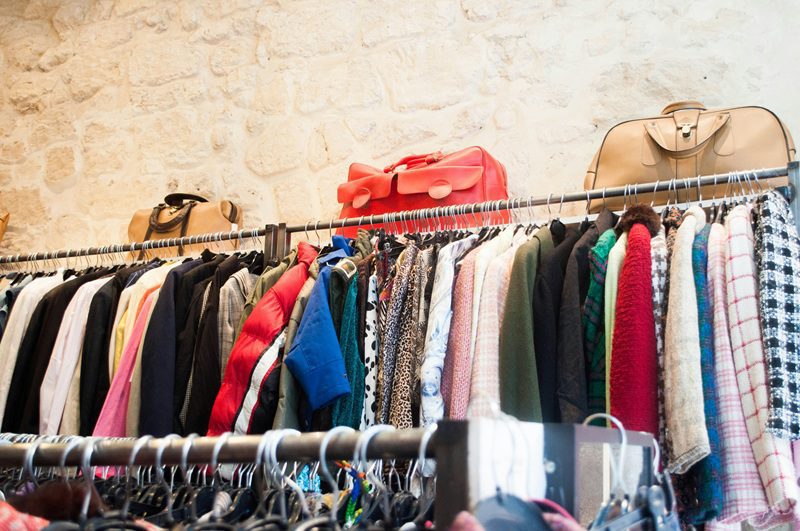
Even if you only grab a few secondhand items a year, that’s still money staying in your pocket.
And that money? That’s where the breathing room starts.
8. Declutter and Sell What You Don’t Use
We all have the bins filled with stuff that don’t have a place, the baskets, the clothes, the toys, the random gadgets taking up shelf space “just in case. And while most of it isn’t actively costing you money, here’s the thing: a lot of it could be giving you money or at least some free space.
Decluttering isn’t just about tidying up. It’s about letting go of the things that you are not using, and maybe turning them into something that you need.
What this looks like in real life:
– Go one category at a time.
Don’t try to declutter all your house at once. That’s overwhelming. Pick one small section, kids’ clothes, kitchen stuff, the toy bin in the living room, and start there.
– List items quickly, even if imperfect.
You don’t need the perfect photo setup or a polished caption. Snap a quick pic, write “$5, porch pickup,” and post it in your local Buy/Sell group or Facebook Marketplace.
I’ve sold things in under 10 minutes with zero effort.
– Use local mom groups.
As I mentioned before, the moms in those groups get it, they’re looking for a high chair that doesn’t cost $100, or a snow jacket in the next size up. I’ve sold or traded things just by posting a “decluttering, anyone need these?” post.
– Donate if you just want it gone.
Sometimes, the real win is just getting the space back.
We’ve done a lot of pickups where people were happy to pick up bags of books, puzzles, clothes, even half-used craft supplies. No selling or guilt. Just out of the house.
– Use the cash for something intentional.
Every time I sell something, I try to put the money toward something useful.
- Grocery money
- Diapers
- Birthday gift fund
- A little treat for myself (because… moms deserve it!)
It makes the “ugh, I need to clean this out” task feel worth it.
One weekend, we cleared out three bins of random stuff, baby gear, clothes, an old booster seat, and made $115. That was grocery money that we needed!. From things we literally hadn’t touched in months.
You don’t have to turn into a minimalist. You don’t have to make a huge profit.
But if your house is full of things you don’t use, there’s a good chance someone else would use them, and be happy to take them off your hands.
9. Get the Kids Involved (Even Just a Little)
I used to think saving money was something I had to do around my kid. Quietly, behind the scenes. But then I realized, why not bring her into it, even just a little?
No, we’re not doing spreadsheet lessons or extreme budgeting bootcamps before she goes to sleep. But small things instead.
And honestly, she kind of enjoys it.
Here’s what that looks like for us:
- Let them help find deals.
When we’re at the store, I’ll say something like, “Can you help me find the cereal that has a yellow sale tag?”. She sees it as a game! - Turn receipt-scanning into a job.
I hand her the receipt, open the Fetch app, and let her scan it. It takes 10 seconds, and she thinks she’s doing something very important.
Then I show her the points we earned and let her pick what we’re saving for. Even if it’s just a $5 gift card for ice cream. - Involve them in decluttering.
When we go through toys or clothes, I’ll ask her, “Do you think another kid would enjoy this now?” Honestly, sometimes she surprises me with how generous she is. Other time, not so much. But it starts the conversation. - Let them help with “use what we have” dinners.
I’ll say, “Can you help me find something we already have to make for dinner tonight?”
Even if she just pulls out a can of beans and yells “THIS!” - Talk about saving without making it heavy.
Things like:- “We’re going to the park today instead of that play place, that way we can save money for our trip next month.”
- “I brought snacks from home so we don’t need to buy any at the store today.”

They don’t need a full financial explanation. Just simple cause-and-effect. She understand that not buying something today will help towards our plans tomorrow.
The goal isn’t to make them worry about money. To me, the goal it’s to help her see that being thoughtful with money is normal.
Kids love to feel included. And the earlier they start understanding that money is a tool, not just something grownups stress about, the better.
Plus, it’s kind of sweet watching them proudly tell someone, “We saved money today.” Even if they’re just talking about the $0.50 coupon they helped clip.
10. Talk About Money Without Shame
If there’s one thing that keeps families stuck in stressful money patterns, it’s silence.
We avoid talking about it, dance around the real numbers, and sometimes just hope it’ll work out because the conversation feels awkward or overwhelming.
But avoiding money talk doesn’t make the stress go away, it usually makes it worse.
I’ve learned, slowly, that one of the most powerful things we can do for our finances and our relationships is just talk about it. Even when it’s uncomfortable. Even when we don’t have it all figured out yet.
If you’re sharing money with someone, try this:
- Keep it short, low-pressure, and regular.
We do a weekly check-in. Nothing formal. Usually 10–15 minutes on a Sunday. We look at what’s coming up that week, bills, groceries, birthdays, and talk about any unexpected stuff from the week before. It’s not a budgeting meeting. It’s more like: “Hey, let’s make sure we’re on the same page before the week takes off.” - Use “us” language.
Not “you spent too much on…” but “we’re a little tight this week, what should we adjust?” It keeps the conversation from turning into a blame game (which helps no one). - Write things down.
Sometimes we’ll make a quick list of expenses or goals. Just seeing it written out makes it feel less messy in our heads. Even a shared note on your phone can help both of you feel like you’re working toward something together.

And if you’re managing money by yourself?
Still check in, with yourself. Set a reminder once a week or every other week to open your banking app, check your bills, and breathe.
You don’t have to solve everything. Just look, be honest with yourself without feeling guilty. You are making progress already.
One of the most freeing shifts I’ve made is learning to look at money as a tool, not a reflection of how “together” I have my life.
You don’t have to talk about everything all at once. You don’t need all the answers.
But choosing to face your money reality with honesty, and without shame, is one of the most powerful things you can do.
It’s not easy. But it does get easier.
11. Give Yourself Credit
Look, saving money isn’t easy.
It’s not just about numbers. It’s about habits, emotions, stress, exhaustion, and sometimes just pure survival mode. And if you’re raising a family on top of it all? Yeah. It’s a lot.
So before you scroll away thinking you haven’t done enough,
Please, Give yourself credit.
Did you:
- Skip takeout one night this week?
- Cancel that free trial before it renewed?
- Declutter a single drawer and sell one thing?
- Choose store brand instead of name brand mac and cheese?
Then you’re doing it. You’re trying and paying attention. You’re shifting.
This isn’t about saving thousands overnight or cutting out every fun thing.
It’s about making small, real-life changes that actually work in your world.
You’re already doing more than you think.
And every small step counts.
Saving Doesn’t Have to Be All or Nothing
If there’s one thing I hope you take away from this, it’s this:
You don’t have to do everything.
You don’t need to master budgeting. Or use every app. Or give up every little thing that makes the day feel doable.
You just need to start noticing and from there, take small steps forward.